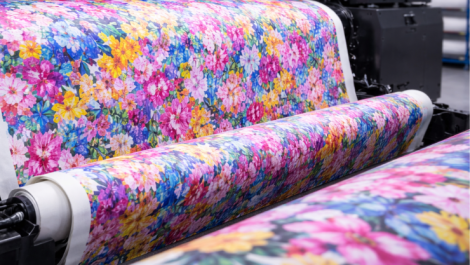
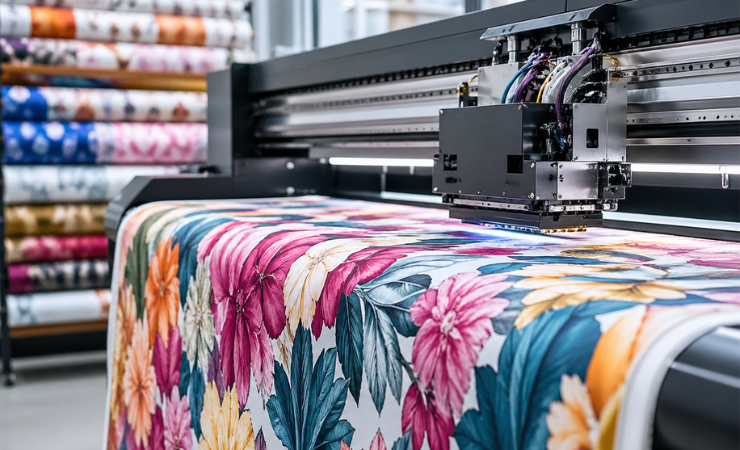
The global digital textile printing market is expected to more than double in value over the next decade, driven by demand for faster production cycles, customised apparel, and more sustainable manufacturing methods.
According to analysis from Future Market Insights, the market is projected to grow from $6.6 billion (£4.9 billion) in 2026 to $13.9 billion (£10.3 billion) by 2036, representing a compound annual growth rate of 7.7%. The sector is also forecast to generate an incremental opportunity of $7.3 billion (£5.4 billion) over the same period.
The findings reflect a broader transition within textile manufacturing, as producers move away from traditional screen printing towards digital inkjet-based processes. These systems enable shorter production runs, faster turnaround times, and reduced waste, supporting the shift towards more agile and responsive supply chains.
Demand is being shaped by the continued rise of fast fashion and micro-collection models, where brands require greater flexibility to respond to changing consumer preferences. Digital textile printing supports this approach by allowing for rapid design iteration and cost-effective short-run production.
Sustainability pressures are also influencing adoption, as environmental regulations increasingly target water-intensive dyeing and finishing processes. Digital printing technologies can significantly reduce water consumption, chemical use, and material waste compared with conventional methods.
Manufacturers are also turning to digital production to reduce inventory risk. On-demand workflows allow for more accurate demand matching, helping to minimise overproduction and unsold stock.
Apparel printing remains the dominant application, accounting for 58% of the market, supported by the growth of e-commerce and demand for personalised clothing. Direct-to-fabric systems lead by printer type with a 54% share, reflecting their suitability for high-throughput industrial production environments.
In terms of ink technologies, reactive inks hold the largest share at 46%, due to their compatibility with natural fibres such as cotton and their durability in wash performance.
Regionally, East Asia accounts for the largest share of global demand at 38%, driven by its established textile manufacturing base. Growth is expected to be strongest in countries including India and China, supported by investment in modernisation and increasing regulatory pressure on traditional processes. Europe and North America, meanwhile, are seeing continued uptake linked to sustainability initiatives and the reshoring of textile production.
The competitive landscape includes established players such as Kornit Digital, Mimaki Engineering, Seiko Epson, EFI Reggiani, Durst Group, SPGPrints, and Atexco. Competition is focused on areas including printhead reliability, ink performance, colour consistency, and integration with digital workflows.
The report concludes that digital textile printing is becoming a core production technology, as manufacturers seek greater speed, flexibility, and efficiency in response to changing market demands.